
Spider Vein Treatment Options
| Sources | Professional societies and health agencies, named in the text |
|---|---|
| Results promised | None |
| Medical advice | None. This is general information |
| Final call | A licensed clinician |
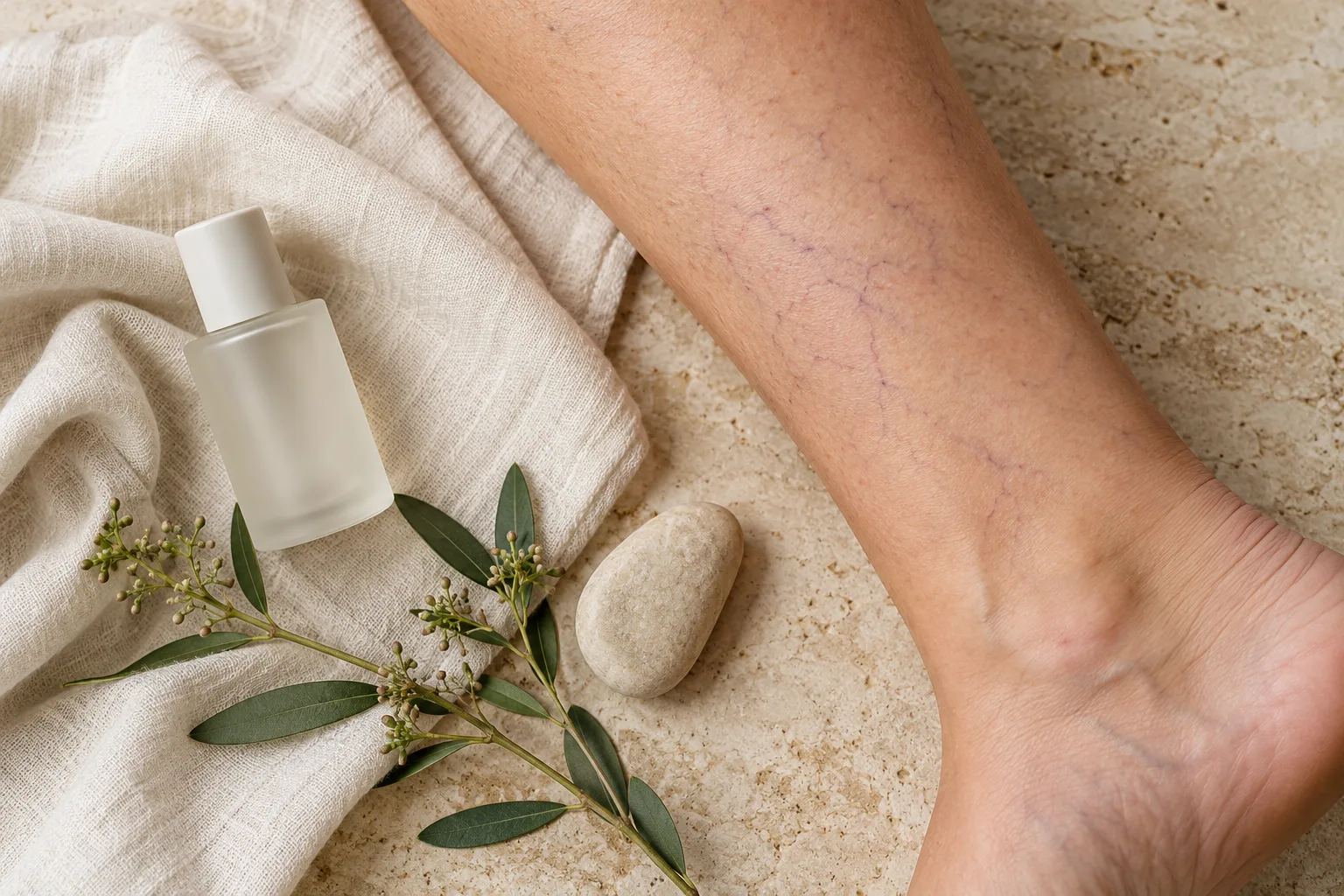
Spider veins are slow to change and slower to settle, which makes treatment a calendar question. Sessions are short, but the full effect takes weeks, and some people need more than one visit. Knowing the timeline in advance helps you choose when to start.
Injection and laser are the two main approaches named by the American Society of Plastic Surgeons, the American Society for Dermatologic Surgery and the American Academy of Dermatology. An examining clinician decides which one suits a given person, and larger varicose veins are a separate subject.
Why spider veins appear
The American Society of Plastic Surgeons says a number of factors may contribute to the development of spider veins in the legs, including heredity, hormonal shifts, occupations or activities that require prolonged sitting or standing, pregnancy and weight fluctuation.
Some items on that list are about family history and life stage, and some are about daily habits. When you see a provider, mention which of them apply to you. A dermatology society's overview of vein treatments is a sensible starting reference.
The two main approaches
The American Society of Plastic Surgeons says there are effective, safe and relatively painless methods available for reducing spider veins. It says the most common treatment involves the injection of a solution into each affected vein, causing the vein to collapse and fade, and that laser treatments are also available for the reduction or removal of spider veins.
Ask which approach is proposed for your veins and why. The sections below take each in turn.
How injection treatment works
The American Society for Dermatologic Surgery describes sclerotherapy as injecting a solution directly into the vein that causes it to scar and collapse, forcing blood to reroute through healthier veins. It says the collapsed vein is reabsorbed into local tissue and eventually fades.
The same society says the procedure is typically performed in the doctor's office, does not require anesthesia and usually takes 15 minutes to an hour to complete depending on the extent of the veins.
A visit that can run from 15 minutes to an hour is easy to fit in. A dermatology society's page on sclerotherapy for spider veins goes into more detail on the injections. Ask your provider how long the visit will be for the veins you have.
How long injected veins take to fade
The American Society for Dermatologic Surgery says treated veins tend to fade within a few weeks, although occasionally it may take up to two months to see the full results. It adds that in some instances, several sclerotherapy treatments may be needed.
This is the planning detail that matters most. If you want legs that look settled for a particular season or event, count back by up to two months for the full result, and allow for the possibility of a second visit. Ask what the provider expects in your case and when you would judge the result.
How laser treatment works
The American Society for Dermatologic Surgery says that during laser/light therapy, a laser is applied to the spider veins. It says the laser transmits photons that are absorbed by the blood cells in the veins, which generates heat that destroys the blood vessel, and that the damaged vein shrinks and eventually dissolves over time.
The mechanism is different from injection, because the vein is heated and not collapsed by a solution. A dermatology society's page on laser therapy for spider veins describes it in full. Ask your provider why a laser is or is not suited to the veins you have.
What results look like, and when
The American Society for Dermatologic Surgery says that with laser therapy, patients may not see any significant changes until several weeks after the procedure, and that multiple treatments may be required.
The timelines across both approaches have the same shape: a short visit, a wait of weeks, and a real possibility of repeat visits. A vein can look unchanged for weeks before it clears, so ask in advance what is expected for yours.
Choosing a plan
The useful questions here are short. Which approach is proposed, and why? How long is each visit? How many visits are likely, and how far apart? When will we judge the result? What does the calendar look like between visits, and does anything in it, such as a season of more time outdoors, need to be raised?
Take them to a licensed clinician who can examine your legs. The sources above describe the options, and an examination decides which one fits.